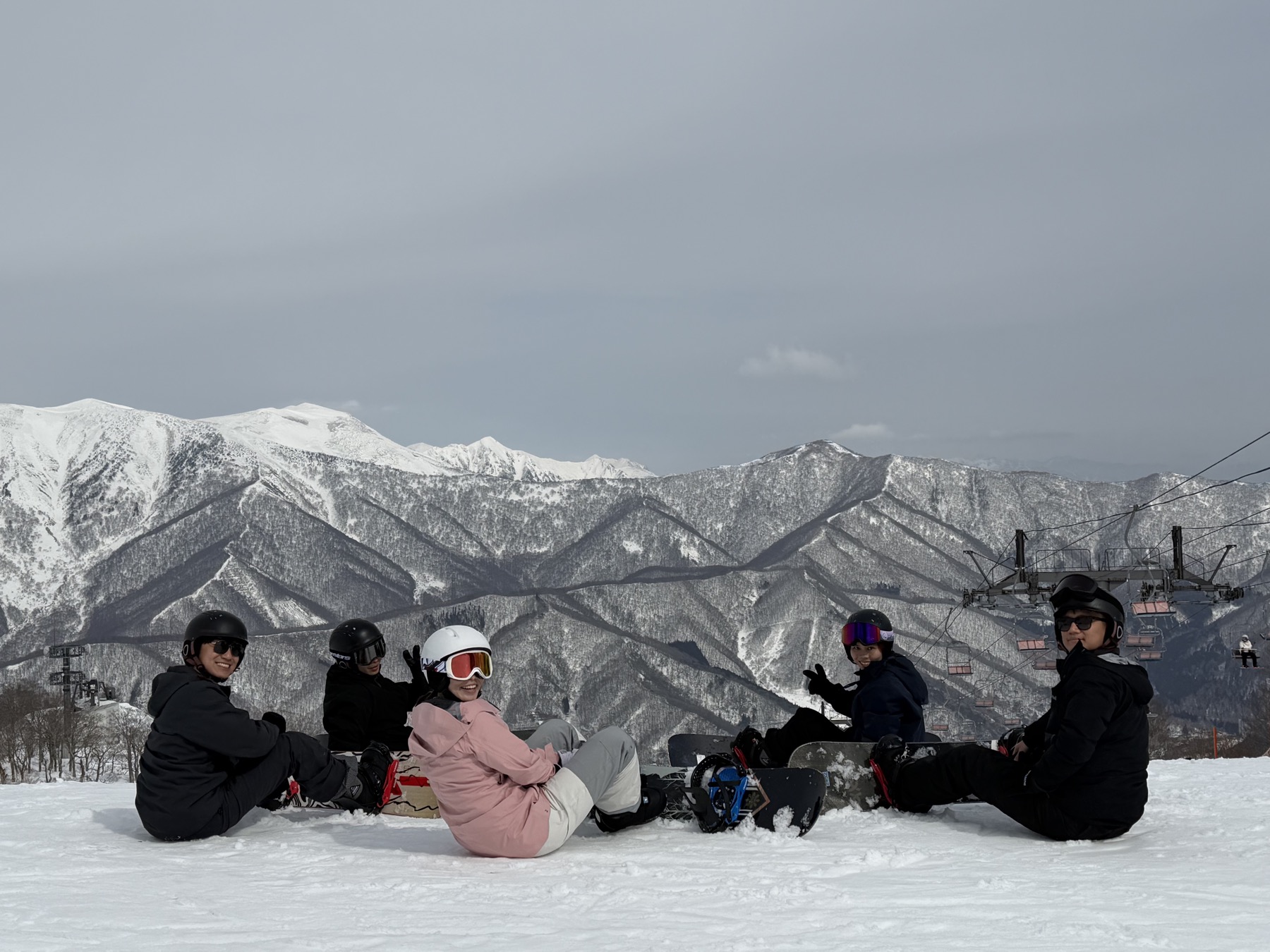
Your first snow trip
A beginner's guide to snowboarding and skiing
For first-timers from Singapore, Malaysia and Taiwan. The numbers come from our beginner camps in Yuzawa, Japan, and most of the advice works wherever you learn.
Skiing or snowboarding for your first trip?
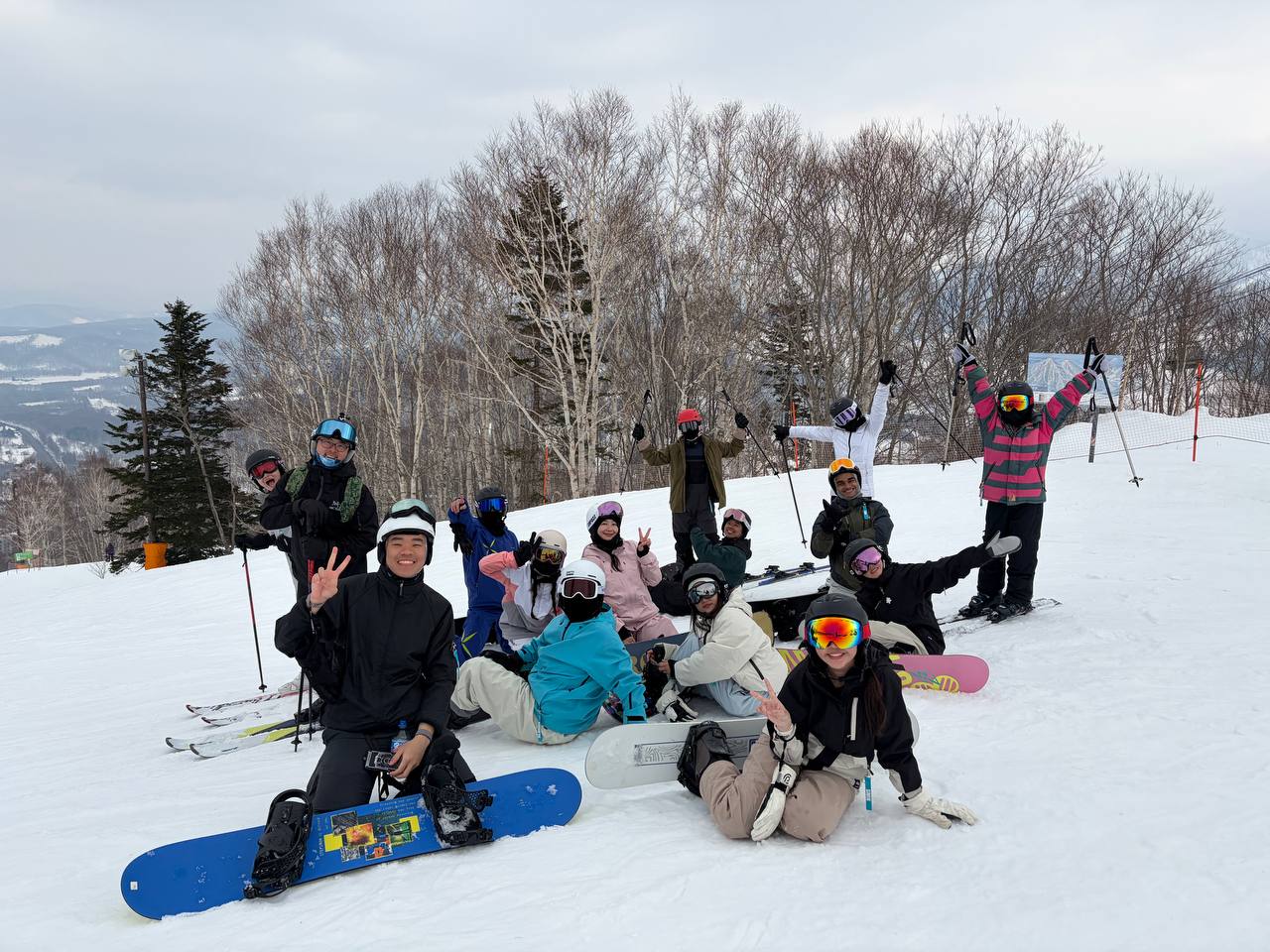
Both work for a first trip, and our Yuzawa camps teach both. The difference is when the hard part comes.
On skis your feet move separately. You can stand, shuffle and stop in a wedge (the snowplough) on the first morning, so most beginners feel in control sooner. The hard part comes later: many people need five to ten days on snow before they make basic parallel turns, as our skiing tips explain.
On a snowboard both feet are strapped to one board and you stand sideways. The first two days are mostly falling, onto your bottom and your hands. Once you can link your turns, progress tends to be quick. Our snowboarding tips put basic linked turns at three to five days on snow for most people.
Our advice: pick the one that looks more fun to you, or the one your friends do, so you have people to ride with. If two days of falls sound miserable, ski. You can try the other one next season.
Skiing vs snowboarding for a beginner
A rule of thumb for the first days on snow. People learn at different speeds.
| Skiing | Snowboarding | |
|---|---|---|
| The first two days | Easier: you stand and stop sooner | Harder: expect a lot of falls |
| After that | Parallel turns take longer to learn | Progress often speeds up |
| Falling | Fewer falls | Mostly onto your hands and bottom |
| Boots | Stiff and awkward to walk in | Softer and easier to walk in |
| Lifts and flat paths | Easy: push along with your poles | One foot out; flat paths are slow |
| What you carry | Two skis and two poles | One board |
What lessons look like, and how many days you need
Take lessons. Learning from a friend saves money on the first morning and costs you the rest of the trip, because habits like leaning back are hard to unlearn later.
Most big resorts in Japan have ski schools on the mountain, and a group lesson is the usual start. Book full days rather than a two-hour taster, and check that the class is taught in a language you understand.
On our Beginner camp in Yuzawa, every session on the snow is coached, with up to five people per instructor, and the camp runs for skiers and snowboarders. It's designed to take you from your first day on snow to riding easy runs on your own, in three full days plus a night session. This is how the five days go.
-
Day 1
Meet at Echigo-Yuzawa Station
Meet your host at 3pm, check in and collect your rental skis or board. Then a welcome dinner and a briefing on the days ahead.
-
Day 2
Balance, stopping and your first turns
A full day with your instructor on gentle slopes: balance, stopping safely, controlling your speed. After dinner, your hosts review your progress with you and set goals for the next day.
-
Day 3
Linking turns, then night skiing
The focus is linking turns without stopping. Our trip page calls it the day it often comes together. After dinner, a guided session on the slopes under the floodlights.
-
Day 4
Longer runs on more varied slopes
More of the resort, longer runs and slightly more varied terrain, so you can ski or ride on your own.
-
Day 5
Rest, or stay for the Improver camp
The camps are designed to stack. After three and a half days on snow, we suggest a rest day in Echigo-Yuzawa before the Improver camp. Everyone else is dropped at the station.
Already done a few days on snow? The Improver camp works on smoother turns on steeper runs. Between trips, our tips for skiing and snowboarding go further, and our free AI coach checks a video of your run.
Choosing where to learn in Japan
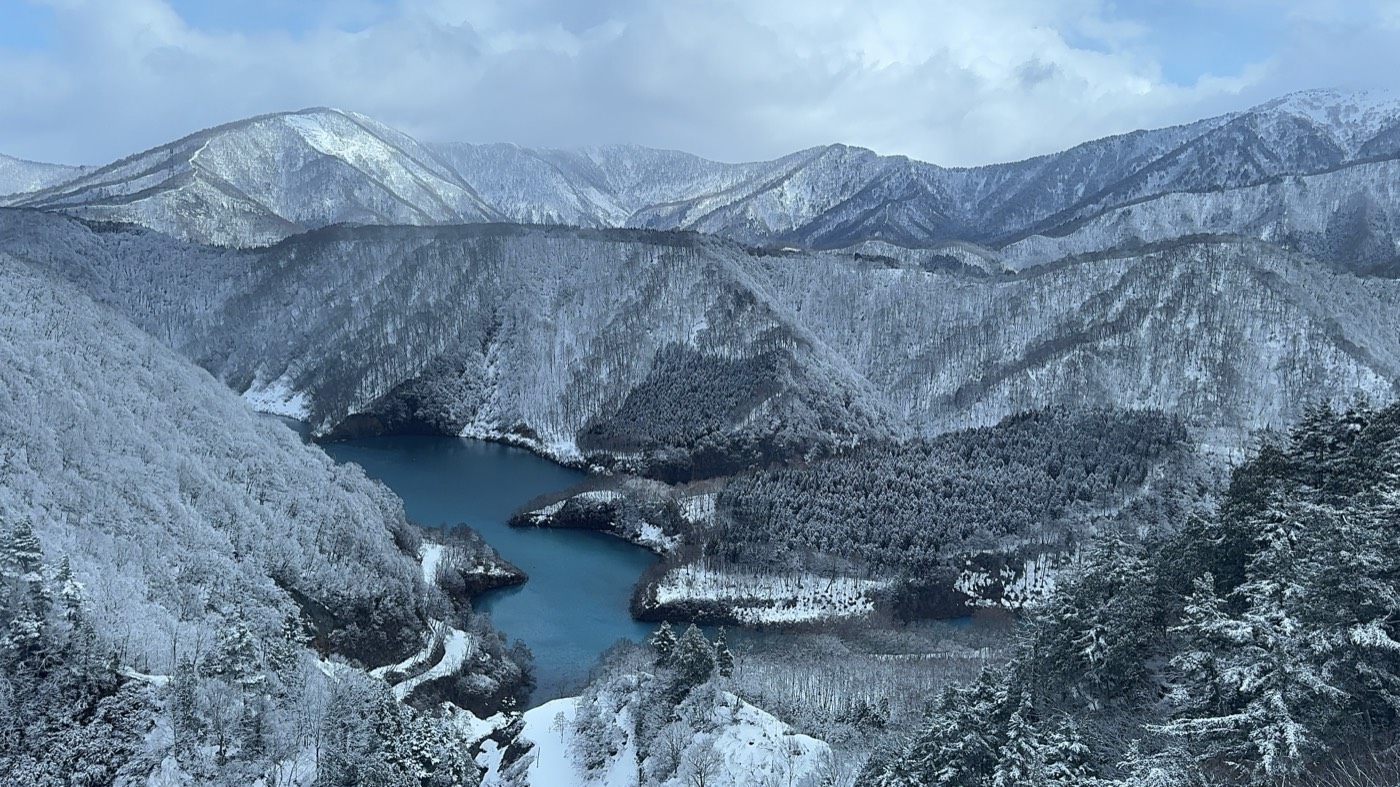
For a first trip, pick a resort that's easy to reach and has plenty of gentle runs. That points to Niigata rather than Hokkaido, which is also colder.
Yuzawa, Niigata
Echigo-Yuzawa is about 75 minutes from Tokyo Station on the Joetsu Shinkansen. Ishiuchi Maruyama, where our camps are based, is a 10-minute bus ride from the station. It has 23 runs: 30% beginner, 40% intermediate and 30% advanced. Night skiing runs every evening from late December to late February, which gives beginners extra practice. Yuzawa is also milder than Hokkaido (the numbers are under Layering).
Niseko, Hokkaido
Hokkaido is colder and gets the deep powder Japan is known for. It takes longer to reach. From Taipei, direct flights to New Chitose take about 4 hours; from Singapore, Niseko United's own guide routes you through Narita or Haneda. The direct bus from New Chitose to Niseko then takes about 2.5 hours. Powder is hard work while you're still learning to turn, so our Hokkaido week is for riders who already have the basics.
Hakuba, Nagano
Hakuba Valley is a group of resorts linked by shuttle buses, about 2 hours 50 minutes from Tokyo at best by the Hokuriku Shinkansen and an express bus. We ran trips there in past seasons, but not this winter.
More on our Japan trips, from Yuzawa to Hokkaido, is in our Japan ski guide and on our Japan ski camps page.
If you're flying from Singapore, our page on learning to ski and snowboard in Singapore lists the snow trips we run for beginners.
What to rent, what to buy and what to pack
Rent the big things. Skis or a snowboard, boots, poles and a helmet are easy to rent at any resort, and on our Beginner and Improver camps they're included. There's no need to fly with a board on your first trip.
Buy the small things, because you can't really share them:
- Goggles. Sun on snow is harsh, and sunglasses fog up and fall off when you crash.
- Waterproof gloves or mittens. Your hands go into the snow every time you fall or sit down.
- A neck warmer or face cover for the wind on the lifts.
- Thermal base layers, top and bottom. Uniqlo's thermal range works fine as a base layer.
- Ski socks. One pair of long, thin-to-medium socks, not two thick pairs, which cramp your feet in the boots.
The ski jacket and pants are the real decision. They must be waterproof, because you'll spend much of day one sitting in the snow. You can rent them: at Ishiuchi Maruyama a set costs ¥13,000 for three days. If you think you'll go again, buying makes more sense. Decathlon sells ski jackets, pants, goggles and gloves in both Singapore and Taiwan. For a one-off trip, borrow from a friend who skis.
Leave the jeans and cotton hoodies at home. Cotton soaks up sweat and snow, and stays cold.
Layering for the cold, from 0 to −10 °C
The most common first-day mistake is wearing too much. You warm up fast while learning: falling, getting up, walking uphill. Then you sweat, sit on a cold chairlift and freeze. Wear three layers you can open or take off:
- Base layer: a thermal top and leggings, synthetic or wool, never cotton. It moves sweat off your skin.
- Mid layer: a fleece or a light down jacket. On a mild afternoon in Yuzawa you may not need it.
- Outer layer: the waterproof jacket and pants, which keep out wind and snow.
Add a thin beanie under the helmet, the neck warmer and the gloves, and keep a dry spare pair of gloves in your locker. Japanese convenience stores sell disposable heat packs (kairo), which help on the lifts.
Snow also reflects sunlight, so you can burn even when it's cold. The WHO says fresh snow and altitude both raise UV levels. Wear sunscreen and lip balm, and keep your goggles on.
- 2.8 °C Yuzawa, avg January high
- −3.2 °C Yuzawa, avg January low
- 377 cm Yuzawa, January snowfall
What a first ski trip costs
Leave out the flights, which depend on your dates, and a first ski trip costs you four things: a lift ticket, rental gear, lessons and a bed near the slopes.
Our 5-day Yuzawa camps start from SGD 1,419 per person in a shared room. That includes 3 full days of lift tickets plus a night session, rental of skis or a board, boots, poles and a helmet, the coaching, 4 nights' stay, breakfast, a welcome dinner and the daily van to the slopes. The Beginner and Improver camps cost a little more than the All-mountain Hosted camp, and each date has its own price. You add the flight to Tokyo, the Shinkansen to Echigo-Yuzawa, ski clothing, other meals and travel insurance.
For comparison, these are Ishiuchi Maruyama's counter prices for an adult, for three days in the 2026–27 season.
Three days at Ishiuchi Maruyama, paid at the counter
Adult prices from the resort's 2026–27 lift ticket list and its rental counter. The ski rental set includes poles.
| Counter price, adult | In our Beginner camp | |
|---|---|---|
| 3-day lift ticket | ¥21,600 | Included |
| Night skiing | ¥3,800 a night | One night included |
| Skis or board and boots | ¥15,600 for 3 days | Included |
| Helmet | ¥5,200 for 3 days | Included |
| Jacket and pants | ¥13,000 for 3 days | Not included |
| Lessons | Booked with a ski school | 3 full days, up to 5 per coach |
20 Nov 2026 · Source: Ishiuchi Maruyama, 2026–27 prices
Slope colours, rules and how to fall
Slope colours
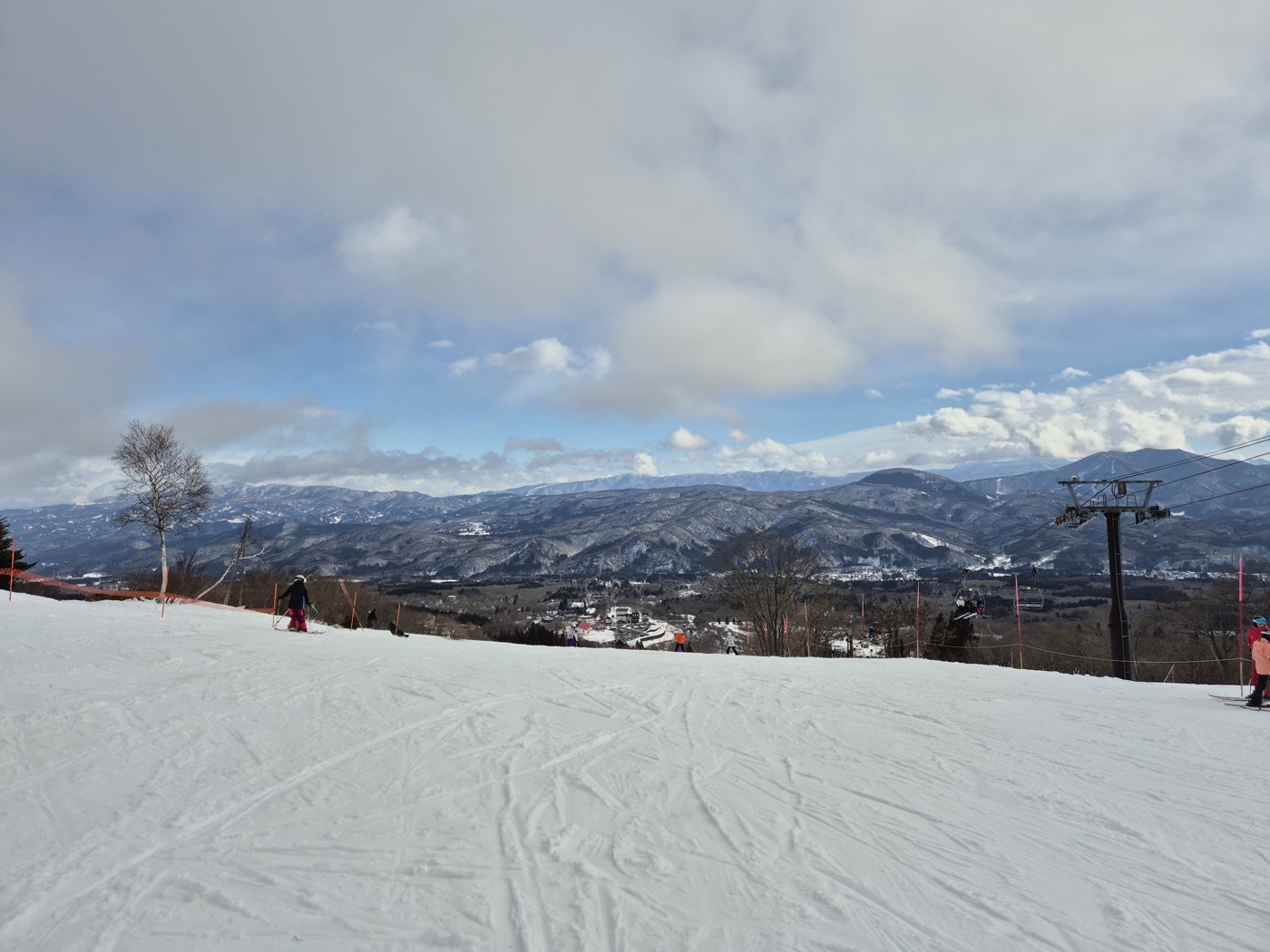
Japanese trail maps mark runs by colour. Ishiuchi Maruyama uses green for beginner runs, red for intermediate and black for advanced; there's no blue. Its Märchen course is a 1,000 m beginner run through the trees. Stay on green runs until you can stop and turn both ways when you choose to.
The code on the slope
Japan's ski-area safety bodies publish a 10-point code for skiers and snowboarders, and Ishiuchi Maruyama posts it on its rules page. The points that matter most on day one:
- The person below you has right of way. It's your job to avoid them.
- Look uphill before you set off, join a run or cross it.
- Don't sit down in the middle of a run, or stop where people above can't see you. After a fall, move to the side.
- Walk, climb and rest at the edge of the run.
- Stay inside the resort's marked runs. In Niseko, going beyond the ropes is only allowed through official gates, with a helmet and an avalanche beacon.
Chairlifts
Lower the safety bar once you're seated. Snowboarders keep the leash on and fold down the back of the binding. If you can't get off in time, stay seated and wait for the staff.
How to fall
When you feel yourself going, get low and sit back or roll onto your side. Don't stick out a straight arm: make fists. Slide with the fall rather than trying to stop dead.
Get fit before you fly, and avoid the day-one mistakes
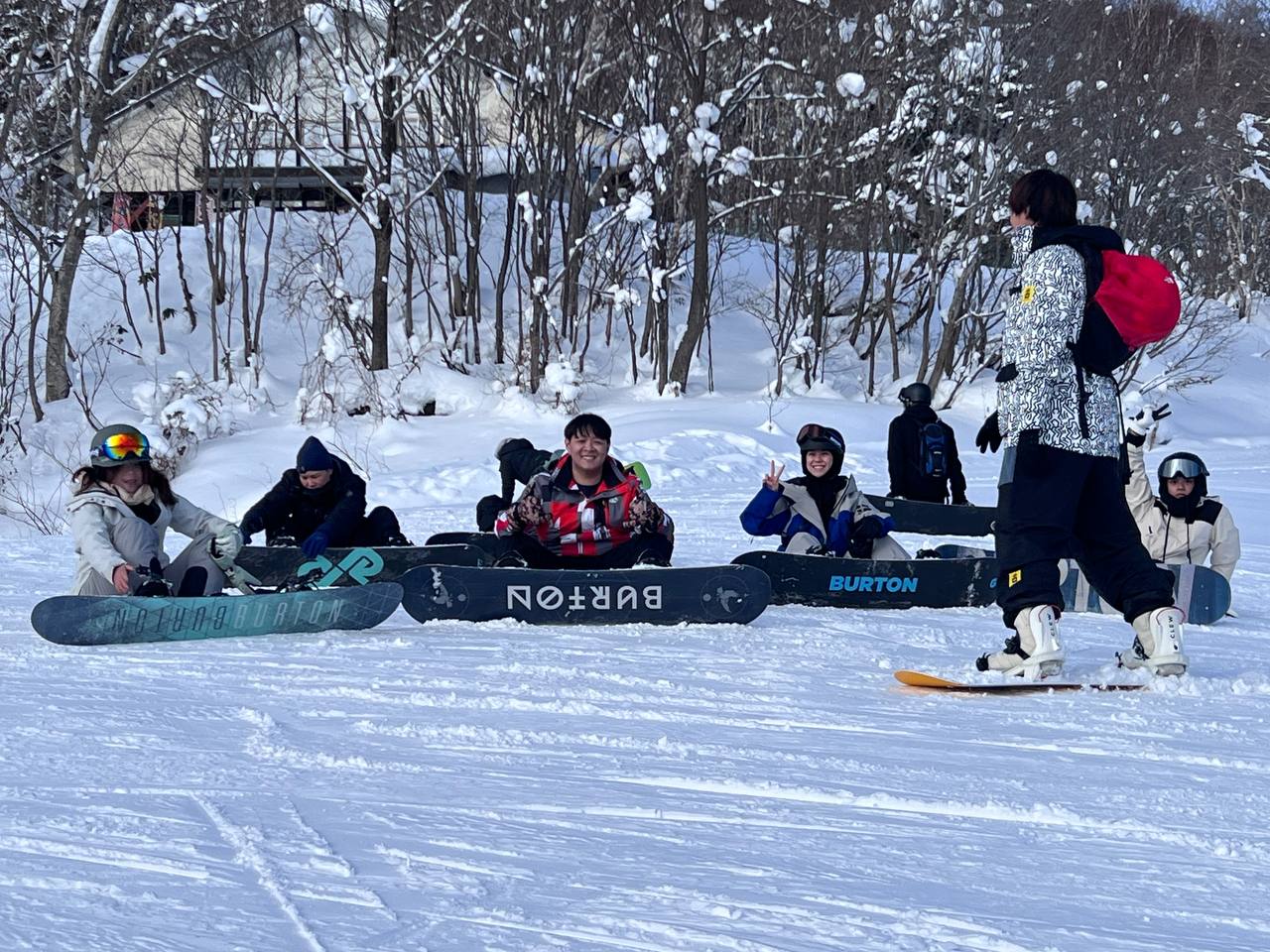
Skiing and snowboarding work your legs all day, in the cold. Our trip page asks for moderate fitness: you should be comfortable with full days outdoors in cold weather. Start a few weeks before you fly. Squats, lunges and wall sits build your thighs, planks your core, and stairs or cycling your stamina. Snowboarders, add some balance work.
Common day-one mistakes:
- Skipping the lesson to learn from a friend.
- Going up too high too soon. A run that's too steep teaches you to lean back and panic.
- Leaning back. Keep your weight over your feet, shins pressing the front of the boots.
- Looking at your feet. Look where you want to go.
- Loose boots or bunched socks. Buckle up firmly and smooth your socks before you clip in.
- No water, no lunch. Cold hides thirst. Carry a small bottle in your jacket.
- One last run. When your legs are shaking, stop for the day.
On our camps we suggest a rest day after three and a half days on snow, so you don't push on tired legs.
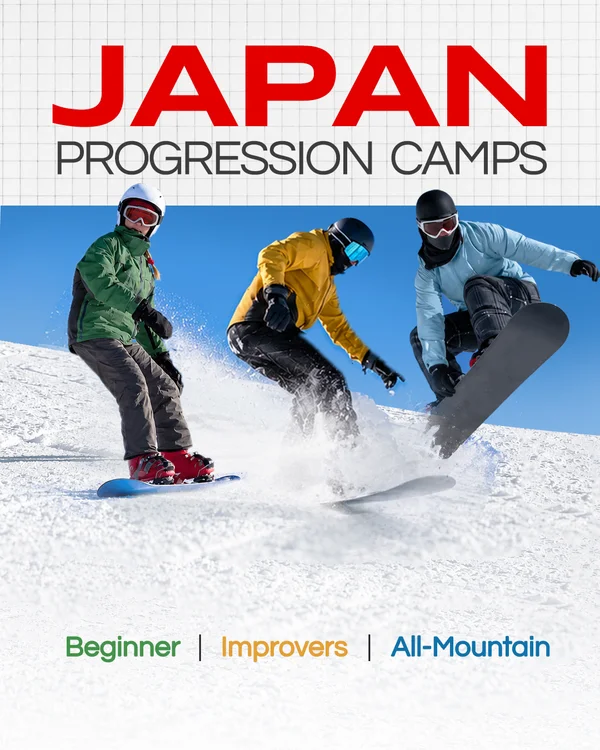
Our beginner and improver ski camps in Japan
Yuzawa for first-timers and improvers; Hokkaido once you can ride most runs.
FAQ
Is skiing or snowboarding easier for a beginner?
Skiing is usually easier for the first two days, because you can stand and stop with your feet apart. Snowboarding means more falls at the start, but once your turns link up, progress often speeds up. Pick the one that looks more fun, or the one your friends do.
How many days does it take to learn to ski or snowboard?
Our Beginner camp is designed to get you down easy runs on your own in three full days plus a night session, in groups of up to five. On a snowboard, most people link basic turns after three to five days on snow. On skis, basic parallel turns often take five to ten days.
Is Japan a good place for a first ski trip?
Yes, if you pick the resort with care. Echigo-Yuzawa is about 75 minutes from Tokyo by Shinkansen, and Ishiuchi Maruyama has 23 runs, 30% of them for beginners, with night skiing for extra practice. Hokkaido is colder and further away, so we suggest it for a later trip.
What should I wear skiing for the first time?
Three layers: a thermal base layer (no cotton), a fleece or light down jacket, and a waterproof jacket and pants. Add goggles, waterproof gloves, a neck warmer and one pair of ski socks. Don't overdress: you'll be warmer than you expect while you're learning.
Should I rent or buy ski gear for my first trip?
Rent skis or a board, boots, poles and a helmet; they're included on our Beginner and Improver camps. Buy goggles, gloves, thermals and socks. For the jacket and pants, rent for a one-off trip (¥13,000 for three days at Ishiuchi Maruyama) or buy if you think you'll go again.
How much does a beginner ski trip to Japan cost?
At Ishiuchi Maruyama's counters, three days of lift tickets plus a night session, rental and a helmet come to ¥46,200 for an adult, before lessons, a bed or transport. Our 5-day Yuzawa camps include all of that plus coaching, 4 nights' stay, breakfasts and the van to the slopes; the trip page has the price for each date. Add the flight to Tokyo, the Shinkansen, ski clothing, other meals and insurance.
When is the best time for a first ski trip to Japan?
January and February, when the resorts are fully open and night skiing runs. For 2026–27, Ishiuchi Maruyama plans to open on 18 December and close on 4 April, with night skiing every evening from 26 December to 27 February. Our Yuzawa camps run from early January to late February; the trip page lists the dates.
Can I go on a ski trip on my own?
Yes. Book alone and take a bed in a shared room, or book a couple room with a friend. Each departure of our Yuzawa camp goes ahead once 12 travellers sign up, and it takes up to 30.
Sources
- Sotravel: Progression ski & snowboard camp in Yuzawa trip page (itinerary, inclusions, coaching ratio, fitness, getting there) Checked 20 Nov 2026
- Niigata Prefectural Tourism Association: Ishiuchi Maruyama (runs, difficulty split, season and night-skiing dates, bus from Echigo-Yuzawa) Checked 20 Nov 2026
- Ishiuchi Maruyama: lifts and courses (run colours, Märchen course) Checked 20 Nov 2026
- Ishiuchi Maruyama: 2026–27 lift ticket prices Checked 20 Nov 2026
- Ishiuchi Maruyama: rental prices Checked 20 Nov 2026
- Ishiuchi Maruyama: rules, the ski area code of conduct and chairlift precautions Checked 20 Nov 2026
- Japan Meteorological Agency: climate normals 1991–2020, Yuzawa (Niigata) Checked 20 Nov 2026
- Japan Meteorological Agency: climate normals 1991–2020, Kutchan (Hokkaido) Checked 20 Nov 2026
- Niseko United: getting to Niseko (flights to New Chitose, bus times) Checked 20 Nov 2026
- Niseko United: Niseko Rules (backcountry gates, helmet and beacon) Checked 20 Nov 2026
- Hakuba Valley: access (travel times from Tokyo, shuttle buses) Checked 20 Nov 2026
- World Health Organization: ultraviolet radiation fact sheet (snow reflection, altitude) Checked 20 Nov 2026