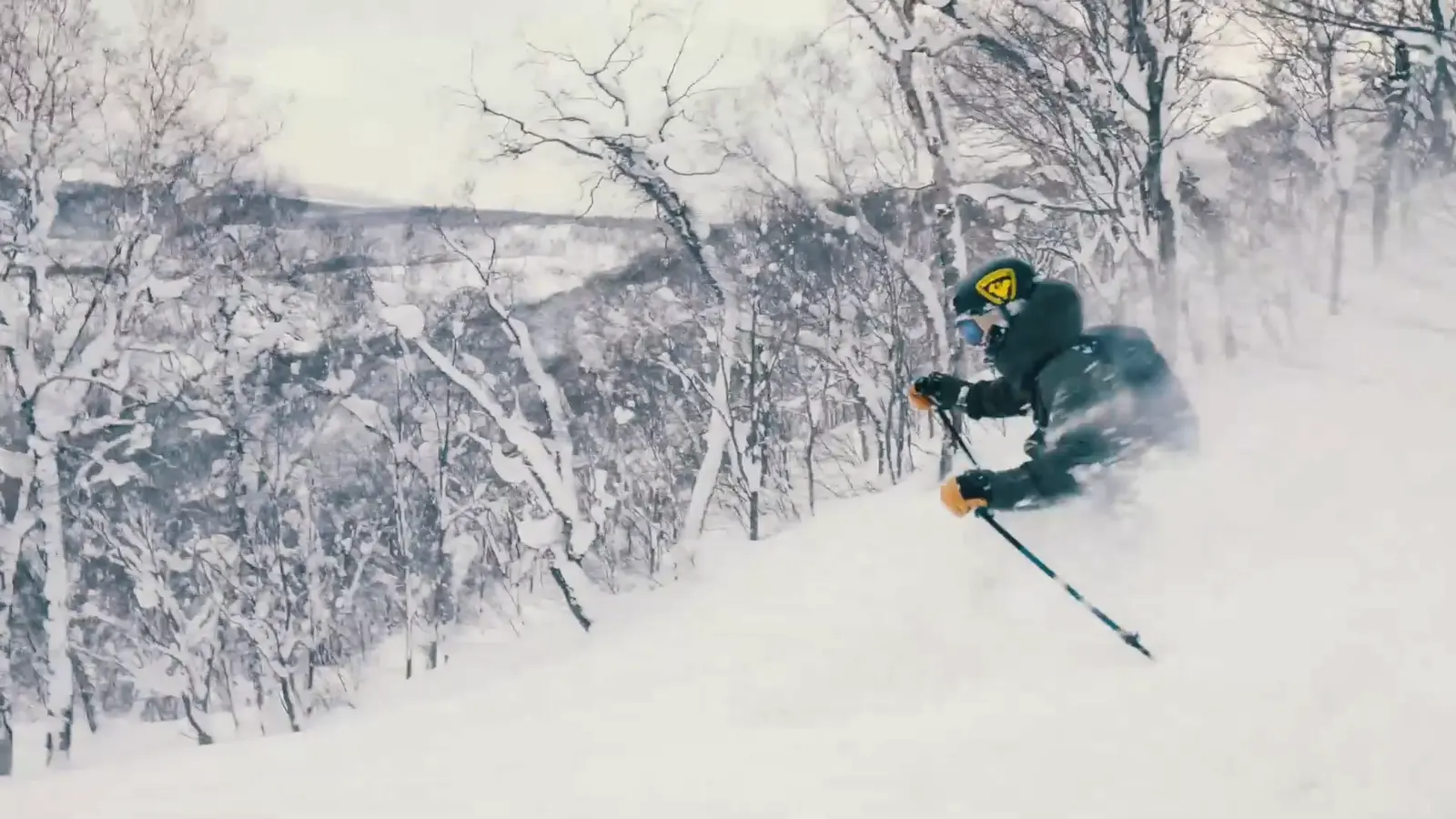
How to get better at skiing
Eight tips to get out of the back seat, trust your outside ski and go from snowplough to parallel.
Intermediate is where most skiers get stuck. You can get down most blue runs, but you're braking more than turning, your legs burn by lunchtime, and steeper or icy slopes still feel out of reach. That usually comes down to a few habits, and every one of them is fixable.
These tips follow PSIA's alpine fundamentals, the skills concept instructors use to teach balance, rotation, edging and pressure. Take them one at a time, on terrain where you feel relaxed.
1. Get out of the back seat
"Back seat" means your hips are behind your feet. It's the most common intermediate habit, and it causes backward falls, burning thighs, shin bang and turns that won't come round.
- Flex your ankles so your shins stay in light contact with the boot tongues.
- Keep your hands forward, where you can see them at the edge of your vision.
- Stay balanced over the middle of your feet. Don't fold forward at the waist to compensate: that only pushes your hips further back.
Drill: on an easy run, hop gently off both skis every few turns. You can only hop from a centred stance (Ski Portillo lists more fixes).
2. Look ahead to where the turn will finish
Look two or three turns ahead, not at your ski tips. Your eyes set your balance and your line: looking down pulls you into the back seat and makes every turn feel rushed. Pick the spot where the next turn will finish and ski to it. Carv's coaches sum it up in two words: "Look ahead!"
3. Control your speed with turn shape
Skidding sideways to brake works, but it's tiring, and it stops working on steep or icy runs. Instead, finish each turn across the hill so your skis come round until you slow down, then start the next one. Rounder, completed turns are your speed control. Carv describes turns as "gravity control", which is a useful way to think about it.
4. Pressure the outside ski
Through each turn, move your balance onto the outside ski: the one on the outside of the curve, which becomes your downhill ski. PSIA's second fundamental is exactly this, directing pressure toward the outside ski. Equal weight on both skis keeps a hidden wedge (the "A-frame") and lets the skis slip.
Drill: on a gentle slope, lift the tail of your inside ski slightly through the turn. If you can't, you're not over the outside ski yet.
5. Steer with your legs, keep your upper body quiet
Turn your legs under a stable upper body that faces down the hill. If your shoulders follow your skis, you finish each turn facing the side of the piste and have to wind up again for the next one. Picture your upper body as a camera pointing down the fall line while your legs do the steering underneath it. PSIA calls this leg rotation, separate from the upper body.
6. Tip your skis on edge with your lower body
Build edge angle with your ankles, knees and hips (angulation) instead of leaning your whole body into the hill. PSIA describes good edging as a "combination of inclination and angulation". Leaning in from the shoulders moves your weight onto the inside ski, and the edges let go just when you need grip, especially on ice.
7. Go from snowplough to parallel gradually
Nobody jumps from a snowplough ("pizza") to parallel in one day. On easy terrain:
- Start each turn in a small snowplough and match the inside ski to the outside ski as the turn finishes.
- Match it earlier and earlier, until your skis are parallel for most of the turn.
- Practise pivot slips: side-slip down the fall line while turning both skis together under a still upper body.
A little speed helps. On an easy slope, skis that are moving turn together more easily than a slow, anxious wedge (OnTheSnow and Ridestore have more intermediate drills).
8. Film yourself and take the odd lesson
Intermediate is when bad habits set in, and from the inside they feel normal. Film a few runs from behind or from the side and compare them with the cues above. Are your hips behind your heels? Do your shoulders swing round with your skis? Is the inside ski still carrying weight?
Our free AI coach does the first review for you. Upload a clip and it pauses at the key moments with arrows and one clear tip each, flags any falls and explains what led up to them. You can ask follow-up questions like "am I leaning back?".
Then book a lesson from time to time. As Carv puts it, "external feedback is essential", and a certified instructor sees things no camera angle will.
Lessons and camps
The biggest jumps happen with daily coaching on new terrain. Our progression ski & snowboard camp in Yuzawa takes beginners to skiing beginner slopes on their own, on the wide, gentle runs of Ishiuchi Maruyama. Our Japan ski & snowboard trips guide explains how the camps run.
Confident on the groomers and ready for deep snow? The all-mountain hosted experience in Niseko, Rusutsu & Kiroro is a 7-day trip across three Hokkaido ski areas for skiers and snowboarders who have the basics, with hosts who plan each day around the best snow. For lesson options and costs, read learning to ski or snowboard in Japan and learning in Singapore, or browse all trips.
Common intermediate skiing mistakes
- Sitting in the back seat. Flex your ankles and bring your hands forward.
- Looking at your ski tips. Look to where the next turn will finish.
- Braking by skidding. Finish your turns to control speed.
- Weighting both skis equally. Commit to the outside ski.
- Rotating the upper body. Keep your chest facing down the hill.
- Leaning in from the shoulders. Edge with your ankles, knees and hips.
- Staying in the snowplough. Match your skis earlier on easy runs.
Off-season training
- Leg strength: squats, lunges and wall sits build the endurance skiing needs.
- Single-leg balance: trains standing on the outside ski.
- Lateral jumps and agility work: help you move quickly from one turn to the next.
- Inline skating: practises weight shifts and edging.
- Indoor or dry slopes: get your feel back before the trip.
- Your old clips: decide which habit to fix first this season.
Skiing FAQs
Quick answers to what skiers ask most.
How long does it take to learn to ski parallel?
With good instruction, many people make basic parallel turns on easy runs after about five to ten days on snow, but it varies a lot. The quickest route is one cue at a time, on terrain where you feel relaxed.
How do I stop leaning back when skiing?
Flex your ankles so your shins press the boot tongues, keep your hands forward and look ahead to the next turn. Hopping lightly off both skis on an easy run is a good check, because you can only hop when you're centred. A video shows whether your hips drop behind your heels in the turn; our free AI coach checks this for you.
How do I get better at skiing without lessons?
Once you have the basics, you can improve on your own: one cue per session, new skills on easy terrain, and video of your skiing so you can see what you're really doing. Our AI coach gives you a free first review. Book a lesson for your first days and whenever you plateau, so bad habits don't set in.
How do I ski better on ice or steeper runs?
Finish your turns to control your speed, commit to the outside ski and build edge angle with your ankles and knees instead of leaning in. Practise on medium slopes first. Sharp edges make a big difference on ice.
Is skiing easier than snowboarding?
Skiing is usually easier for the first few days, because you can stand and stop on two independent skis. Snowboarding is harder at the start but many people reach a confident level sooner. Our snowboarding tips cover the other side.
How do I film myself skiing?
Ask a friend to film from behind or from the side, a few metres away, with your whole body in frame. Keep the phone steady, record 10 to 60 seconds of normal skiing and avoid zooming in. Filming from behind shows the outside ski and side-to-side balance best; from the side shows whether you're in the back seat.
Keep going
 Free AI ski & snowboard coach Upload a clip and get coaching drawn on your own video. →
 How to get better at snowboarding Eight tips to stop falling, link turns and carve. → Japan ski & snowboard trips How our Japan camps and powder trips work. → Niseko, Rusutsu & Kiroro A 7-day hosted trip across three Hokkaido ski areas. →
Sources
Instruction in this guide follows these coaching resources: