South America
Machu Picchu to the Uyuni salt flats in 11 days
Our small-group trip from Lima to Santiago: the route, how high it goes, Bolivia's visa, flights from Singapore and what the price covers.
Machu Picchu is near Cusco in Peru, and the Uyuni salt flats are in southern Bolivia, with La Paz in between. Our 11-day trip links them with four flights within South America, starting at Lima airport and ending in Santiago, Chile. The flights cut out the longest drives, but the last four days are still long days on the road, across the Bolivian altiplano and over the border into Chile. Bolivia is also the one country on the route that needs paperwork for most of our travellers.
The route, day by day
The trip runs from north to south along the Andes. Peru takes the first five days, Bolivia the next four, and Chile the last two. You stay in 3-star hotels, two to a room, except for two nights in basic homestays on the Bolivian altiplano.
Eleven days from Lima to Santiago
From the trip page's itinerary. The flights Lima–Cusco, Cusco–La Paz, La Paz–Uyuni and Calama–Santiago are included.
| Where | What you do | Sleep | |
|---|---|---|---|
| Day 1 | Lima | Arrive, free day in Miraflores | Hotel |
| Day 2 | Cusco (flight) | City tour, Qorikancha, Saqsayhuaman | Hotel |
| Day 3 | Rainbow Mountain | 4am start, hike above 5,000 m | Hotel, Cusco |
| Day 4 | Sacred Valley | Chinchero, Maras, Moray, train | Hotel, Aguas Calientes |
| Day 5 | Machu Picchu | Guided visit, train back | Hotel, Cusco |
| Day 6 | La Paz (flight) | Free afternoon to adjust | Hotel |
| Day 7 | La Paz | Valley of the Moon, cable car | Hotel |
| Day 8 | Uyuni (flight) | Salt flat, Incahuasi Island | Homestay |
| Day 9 | Altiplano lagoons | Laguna Colorada, Dalí Desert | Homestay |
| Day 10 | San Pedro de Atacama | Border crossing, free afternoon | Hotel |
| Day 11 | El Tatio, Santiago | Geysers, flight to Santiago | Trip ends |
25 Nov 2026
How high it goes
Lima is on the coast. From day 2 you are in the Andes, and the trip page says you spend several days above 3,000 m.
Two parts stand out. The first is Rainbow Mountain on day 3, your second day at Cusco's height. Peru's tourism ministry puts Vinicunca at 5,036 m and its top viewpoint above 5,200 m. The trip page puts the hike at about 4.5 km over 3.5 hours, and says the altitude makes it much harder than the distance suggests. An optional climb goes to Red Valley, which the trip page puts at 5,080 m.
The second is the altiplano on days 8 and 9, where the trip page says parts of the route are around 4,500 m, and you sleep in basic homestays.
The trip page says altitude sickness can affect anyone, whatever their age or fitness. It asks you to train before you go (walking, light cardio, stairs), to talk to your doctor about altitude medicine, and to get medical advice first if you have a heart, lung or breathing condition. La Paz has a free afternoon on day 6 to let you adjust.
Visas: Peru and Chile are simple, Bolivia is not
Peru and Chile let all four passports in without a visa. Bolivia is the one to plan for. Singaporean, Malaysian and Taiwanese passports need a visa before you cross the border. Hong Kong passports get a 30-day visa on arrival.
For Singaporean and Taiwanese passports, the trip page says we help you apply at the Bolivian consulate in Cusco during the trip, and the visa fee is included. You prepare the documents before you leave. For Taiwanese passports, Taiwan's Bureau of Consular Affairs lists them: a passport valid for six months, the online form, a yellow fever certificate, an onward ticket, a hotel booking, proof of funds and a photo. Ask us for the current list for a Singaporean passport. If you hold a Malaysian passport, ask us how the visa is arranged when you book.
Chile gives Singaporean and Malaysian passports 30 days. That is plenty for this trip, but it matters if you plan to stay on in Chile.
Visas for a holiday, by passport
From Singapore's foreign ministry, Malaysia's embassy in Lima, Hong Kong's Immigration Department, Taiwan's Bureau of Consular Affairs and Chile's consular visa table.
| Peru | Bolivia | Chile | |
|---|---|---|---|
| Singapore | No visa, 90 days | Visa needed | No visa, 30 days |
| Malaysia | No visa, 90 days | Visa needed | No visa, 30 days |
| Hong Kong (SAR) | No visa, 90 days | Visa on arrival, 30 days | No visa, 90 days |
| Taiwan | No visa, 90 days | Visa needed | No visa, 90 days |
25 Nov 2026
Rules change, so check with the embassy for your passport before you fly.
Machu Picchu: the train, the early bus and the citadel
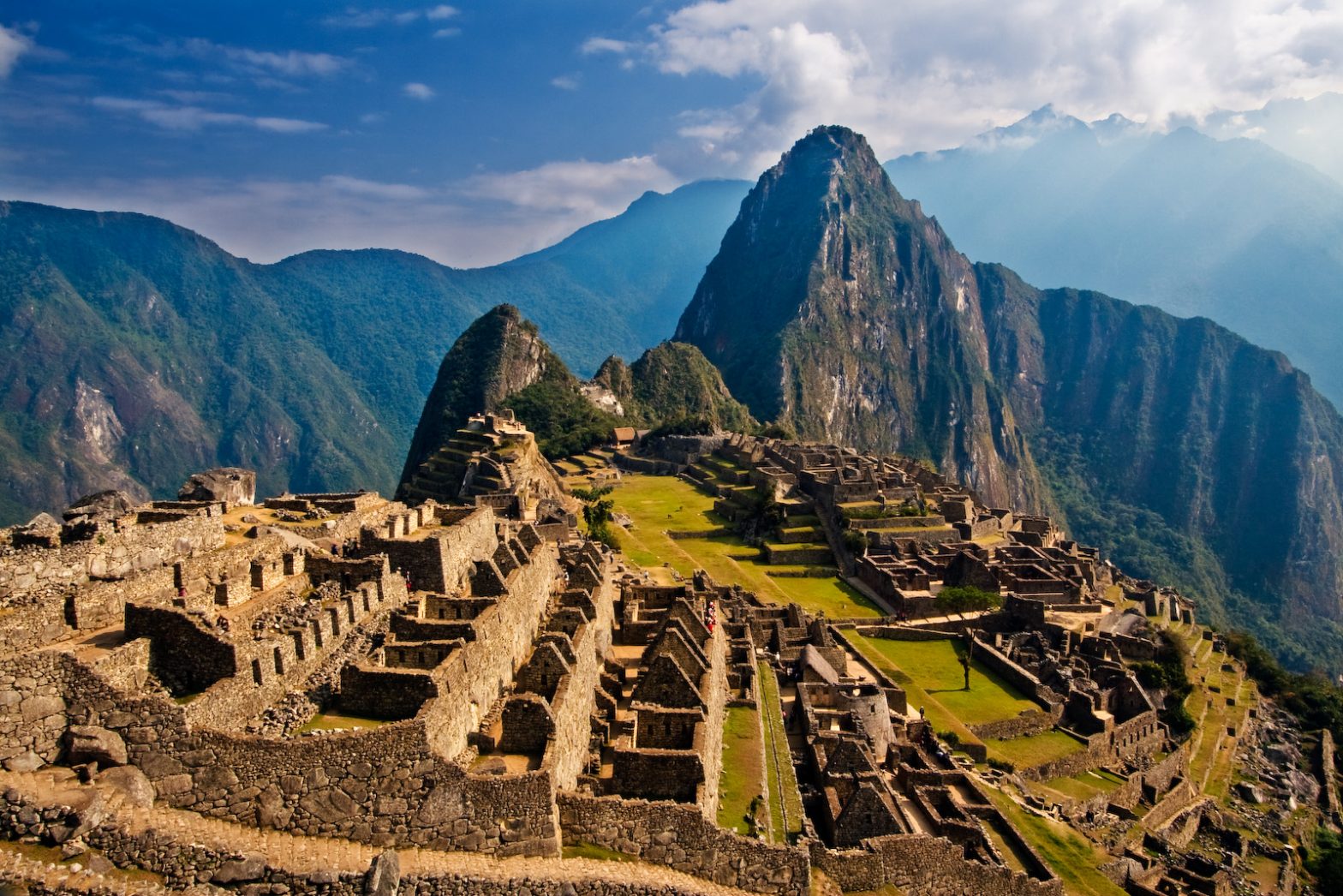
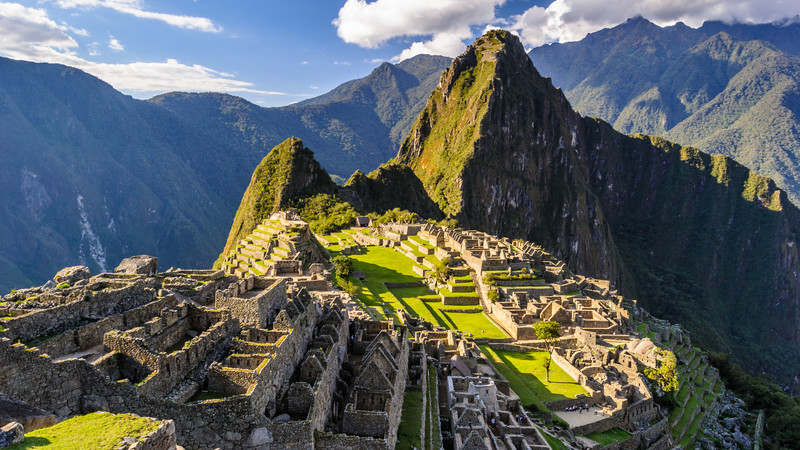
Machu Picchu takes two days on this trip. On day 4 you tour the Sacred Valley: Chinchero's market and colonial church, the salt pans of Maras, the round terraces of Moray and the fortress at Ollantaytambo. Then you take the afternoon train from Ollantaytambo to Aguas Calientes, the town below the ruins, and sleep there.
On day 5 an early bus climbs to the citadel. You get a guided tour of about two hours through the temples and terraces, then free time on your own. The trip page warns that the time can shift with the circuit and entry hour on the day. In the afternoon you take the train back to Ollantaytambo and drive to Cusco.
The train both ways, the bus both ways, the entrance ticket and the guide are in the price.
Rainbow Mountain: the hardest morning of the trip
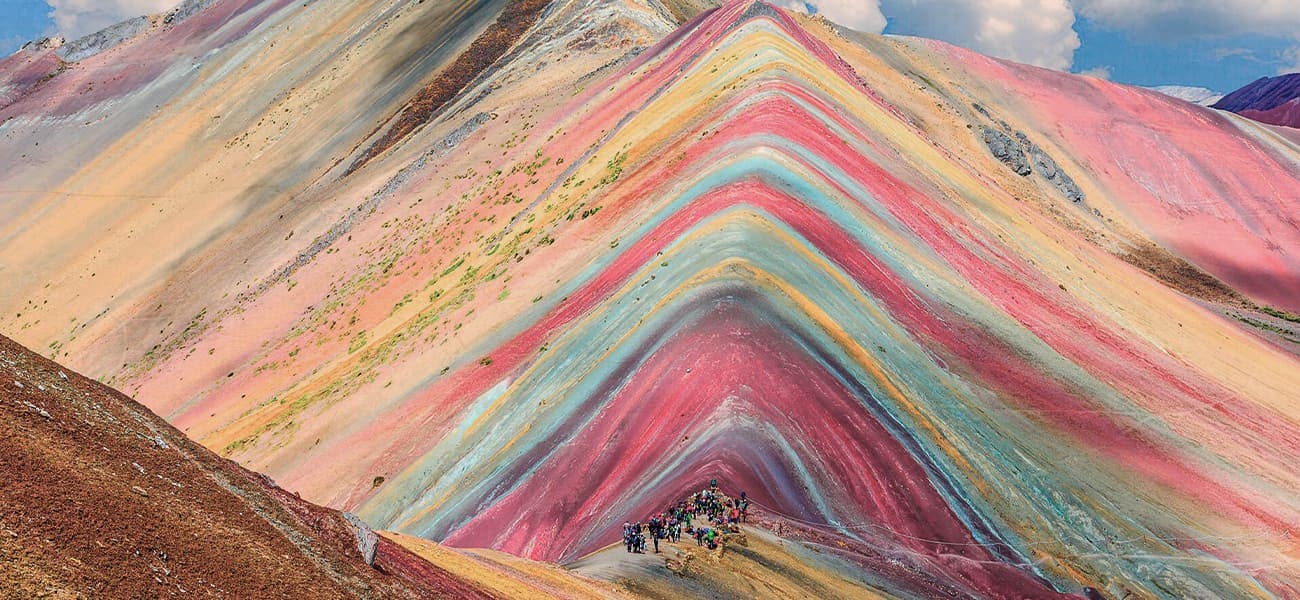
Day 3 starts with a 4am pickup in Cusco. You drive south, stop for breakfast in Cusipata, and start walking from the trailhead. The path crosses open grassland with llamas and alpacas, up to the striped slopes of Vinicunca, with the snow peaks of Ausangate behind. If you still have energy, there is an optional walk to Red Valley.
Lunch is a buffet on the way back. You are back in Cusco for the night.
The trip page says it can be near freezing on the early hike. Wear layers you can take off as the sun comes up, and bring gloves and a beanie.
Uyuni and the lagoons: white crust, not a mirror
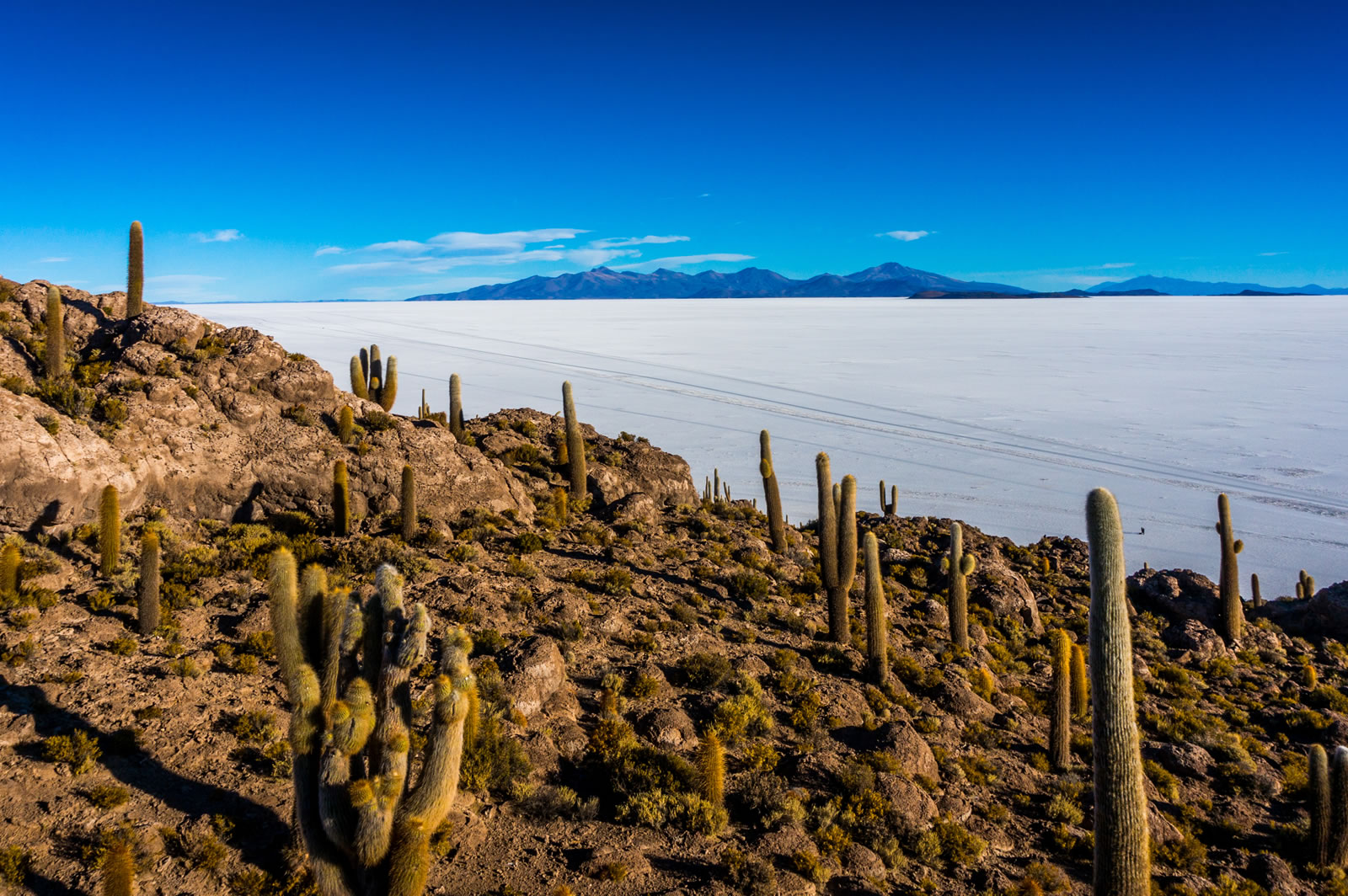
On day 8 you fly from La Paz to Uyuni. The day starts at the Train Cemetery, rusting locomotives on the edge of town, then the salt workshops of Colchani. On the flat you stop at the Ojos del Salar springs, the salt hotel at Playa Blanca, the Dakar monument and the flags. Then you drive about 70 km across the salt to Incahuasi Island, a rocky island covered in tall cacti, and on to the village of San Juan for the night.
Day 9 crosses the altiplano: Laguna Colorada, a red lake with flamingos, Laguna Verde, Laguna Blanca and the rock shapes of the Dalí Desert. Both nights are in homestays, which the trip page describes as basic, with fewer facilities than the hotels.
The mirror is a rainy-season sight
The famous mirror, where the salt reflects the sky (天空之鏡 in Chinese), needs a thin layer of water on the flat. The European Space Agency says the flat floods as the rains arrive between December and March, and is dry from April to November.
The trip page puts our departure in the dry season, so expect a hard white crust cracked into polygons, not reflections. Dry ground is also what lets you drive out to Incahuasi Island, which the itinerary visits in the dry season.
Getting there from Singapore, Kuala Lumpur or Hong Kong
There's no non-stop flight. The trip page says Singapore to Lima needs connecting flights and takes about 32 to 36 hours. From Kuala Lumpur or Hong Kong you connect too, so check the transit rules of the country you change planes in.
The pickup at Lima airport (LIM) is at 10am on day 1, so plan to land that morning or arrive the day before. The trip ends in Santiago (SCL) after a flight from Calama on day 11. Book your flight home from Santiago, not Lima: an open-jaw ticket, into Lima and out of Santiago. The itinerary gives no landing time in Santiago, so ask us before you book a same-day flight home.
The four flights within South America (Lima–Cusco, Cusco–La Paz, La Paz–Uyuni, Calama–Santiago) are part of the trip.
What the price covers
The trip is from SGD 6,149 per person, twin-sharing. It goes ahead with 6 travellers and takes up to 16, with an English-speaking guide throughout. A private room is available at checkout for an extra charge.
Included:
- Four flights within South America, private transfers, and the train between Ollantaytambo and Aguas Calientes both ways.
- Hotels (3-star, twin-sharing) and two homestay nights in Bolivia.
- Breakfast every day from day 2, and lunch on the Rainbow Mountain day.
- Guided tours in Cusco, the Sacred Valley, Machu Picchu, La Paz, Uyuni, the lagoons and the Dalí Desert, and the La Paz cable car.
- Entrance tickets to Machu Picchu (with the bus), the Eduardo Avaroa Andean Fauna National Reserve and the El Tatio geysers.
- The Bolivian visa fee for Singaporean and Taiwanese passports, arranged at the consulate in Cusco.
Not included: international flights, meals other than those above, and travel insurance, which is compulsory. It must cover medical costs, cancellation, emergency evacuation and high-altitude travel. Check the altitude limit in your policy: Rainbow Mountain is above 5,000 m.
Bring US dollars in clean, undamaged notes. The trip page says they are easy to change in Peru and Bolivia, and that small towns often take cash only.
Our Peru, Bolivia & Chile trip
FAQ
How long is the flight from Singapore to Peru?
There is no non-stop flight. The trip page estimates 32 to 36 hours from Singapore to Lima with connections.
Do Singaporeans need a visa for Bolivia?
Yes. Singapore's foreign ministry says Singaporeans need a visa for Bolivia. On this trip we help you apply at the Bolivian consulate in Cusco, the fee is included, and you prepare the documents before you leave. Bring a yellow fever certificate too.
Will I see the Uyuni salt flats as a mirror?
Not on this trip. The mirror needs a thin layer of rainwater on the salt, which the European Space Agency puts between December and March. Our trip runs in the dry season, when the flat is a hard white crust and you can drive out to Incahuasi Island.
How hard is the Rainbow Mountain hike?
About 4.5 km over 3.5 hours, according to the trip page, to a mountain Peru's tourism ministry puts at 5,036 m. The distance is short, but the altitude makes it much harder than it sounds. Train on stairs and hills before you go.
How cold does it get?
The trip runs in the dry season, which is winter in the southern hemisphere. The trip page gives 15–22 °C by day in Cusco, 0–5 °C at night, and −5 °C to 5 °C at night around Uyuni and the altiplano, where the homestays are basic. San Pedro de Atacama is warm by day and cold after sunset. Bring a down jacket, thermal layers, gloves and a beanie.
Is travel insurance compulsory?
Yes. It must cover medical costs, trip cancellation, emergency evacuation and high-altitude travel, and you may be asked for proof before departure. Check that your policy's altitude limit covers a hike above 5,000 m.
Does the trip go to Easter Island or Patagonia?
No. It ends in Santiago on day 11. If you want to add either, book it yourself from Santiago after the trip.
Can I join from Malaysia, Hong Kong or Taiwan?
Yes. The trip starts at Lima airport, so you fly in from wherever you are, and the trip page shows the price in your currency. Taiwanese passports need a Bolivian visa, which we help with in Cusco. Malaysian passports need one too: ask us how it's arranged when you book. Hong Kong passports get a visa on arrival.
Sources
- Sotravel: Peru–Bolivia–Chile Expedition trip page (itinerary, inclusions, FAQ, weather, difficulty) Checked 25 Nov 2026
- Ministry of Foreign Affairs Singapore: Peru travel page (visa) Checked 25 Nov 2026
- Ministry of Foreign Affairs Singapore: Bolivia travel page (visa) Checked 25 Nov 2026
- Embassy of Malaysia, Lima: requirements for Malaysians (Peru and Bolivia) Checked 25 Nov 2026
- Hong Kong Immigration Department: visa-free access for HKSAR passport holders Checked 25 Nov 2026
- Bureau of Consular Affairs, Taiwan: Peru (visa) Checked 25 Nov 2026
- Bureau of Consular Affairs, Taiwan: Bolivia (visa, documents, where to apply) Checked 25 Nov 2026
- Chile Consular Service: visa and fee table (stay allowed by passport) Checked 25 Nov 2026
- US CDC Travelers' Health: Bolivia (yellow fever requirement and recommendation) Checked 25 Nov 2026
- Communicable Diseases Agency, Singapore: yellow fever (certificate on arrival) Checked 25 Nov 2026
- Peru's Ministry of Foreign Trade and Tourism: Montaña Winikunka (Vinicunca), tourism inventory Checked 25 Nov 2026
- ESA Copernicus: Sentinel-3 shows the Salar de Uyuni's seasonal change Checked 25 Nov 2026